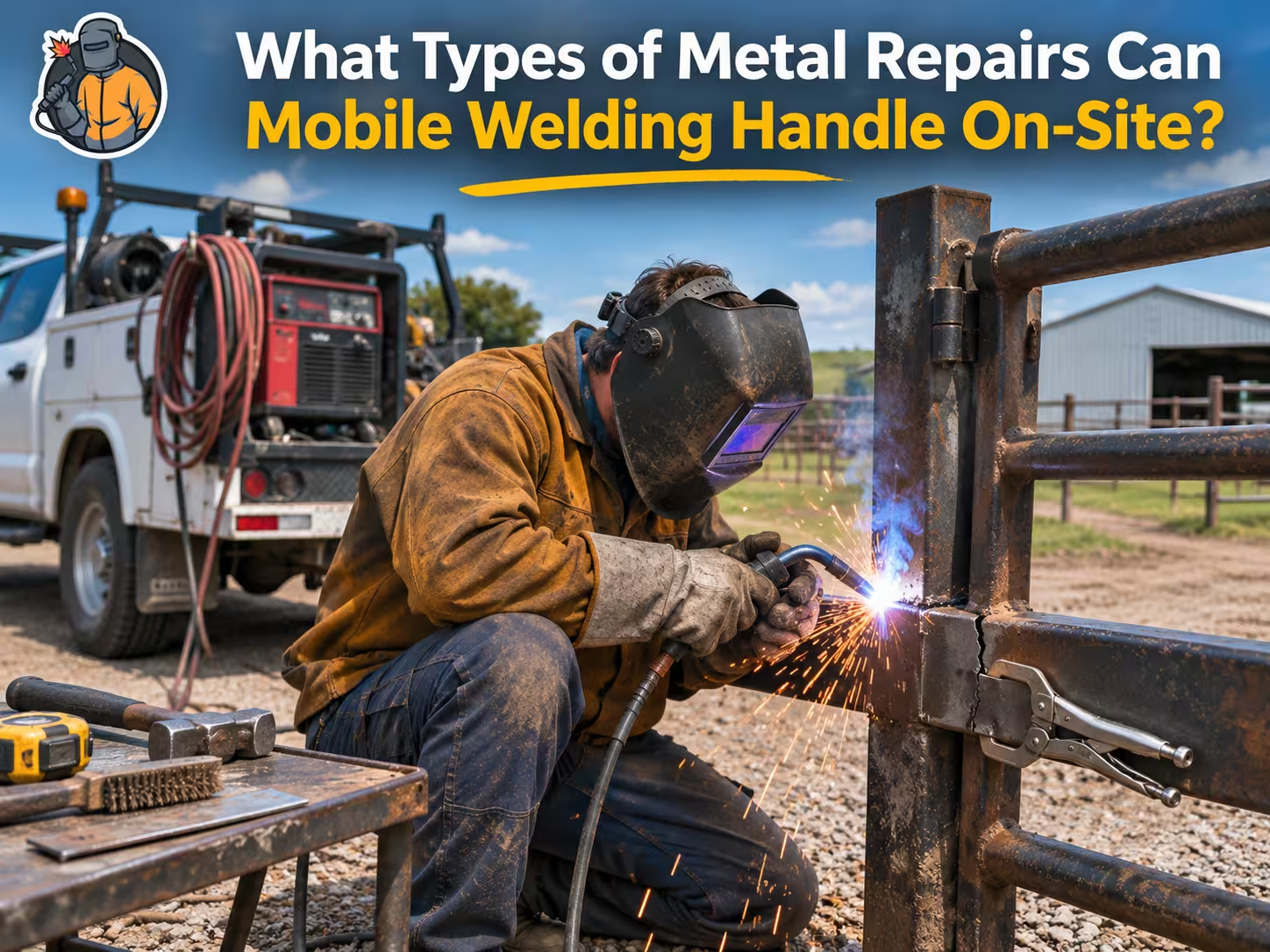
A steel gate at a commercial property suddenly stops closing because one of its welded connections has cracked. The gate is too large to transport easily, but leaving it damaged creates security concerns. The property manager needs a repair solution that does not involve removing the entire structure.
A similar problem can occur at a manufacturing facility when a metal bracket breaks on installed equipment. Moving the machinery to a welding shop could require extensive disassembly, transportation, and additional downtime. In situations like these, bringing welding equipment to the property may be more practical.
Mobile welding allows qualified welders to perform suitable metal repairs, modifications, and fabrication work at the project location. However, its usefulness depends on the material, accessibility, working conditions, and safety requirements. Understanding how the service works helps property owners, contractors, and facility managers choose the right approach.
What Is Mobile Welding?
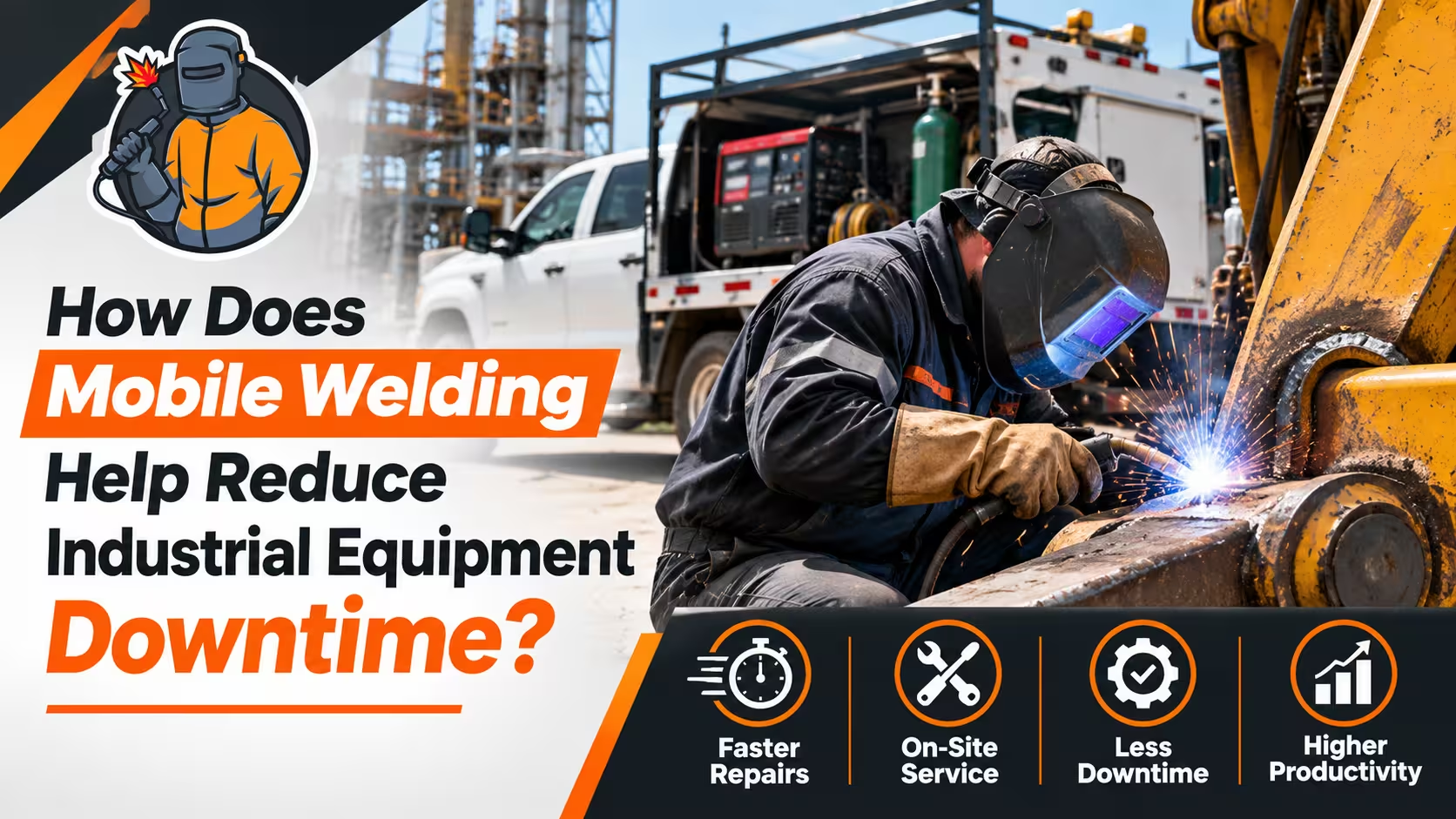
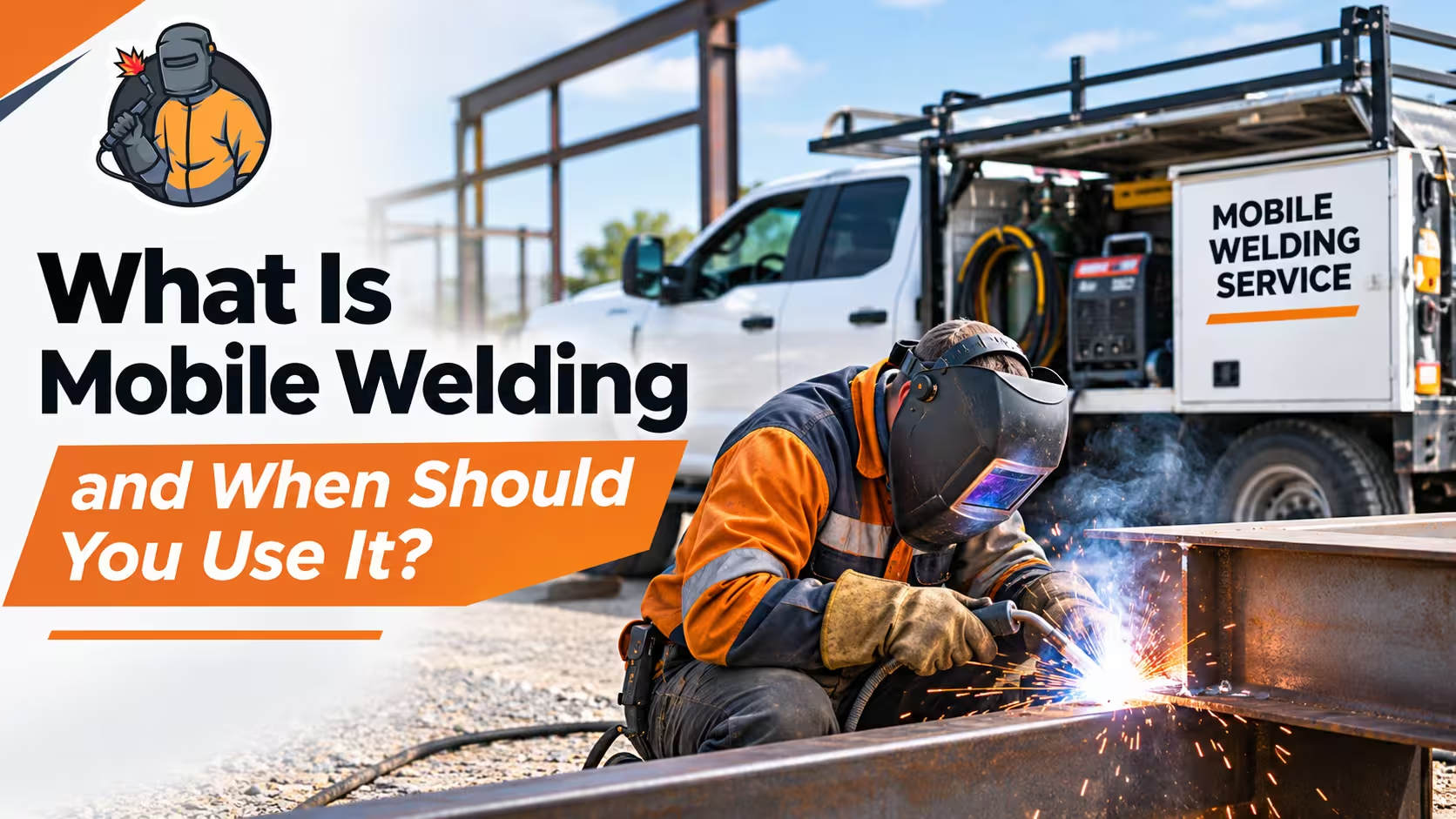
Mobile welding is a professional welding service performed outside a permanent fabrication workshop. Instead of transporting a metal component to a shop, the welder travels to the location with the equipment needed for the approved work.
The service may involve repairing damaged metal connections, joining structural components, modifying installed assemblies, or completing fabrication tasks that are more practical on-site.
On-site welding is particularly useful for large, heavy, or permanently installed metal structures. It can also support construction projects where components must be fitted and joined at their final location.
However, mobile welding does not mean every metal component can be repaired where it stands. The welder must first determine whether the material, surroundings, and required welding procedure make fieldwork appropriate.
How Do Mobile Welding Services Work?
A mobile welding project begins before the welding equipment is switched on. The contractor needs to understand the problem, evaluate the worksite, and determine which tools and procedures are suitable.
Step 1: Assess the Welding Project
The initial assessment identifies the component, metal type, damage, accessibility, and intended function.
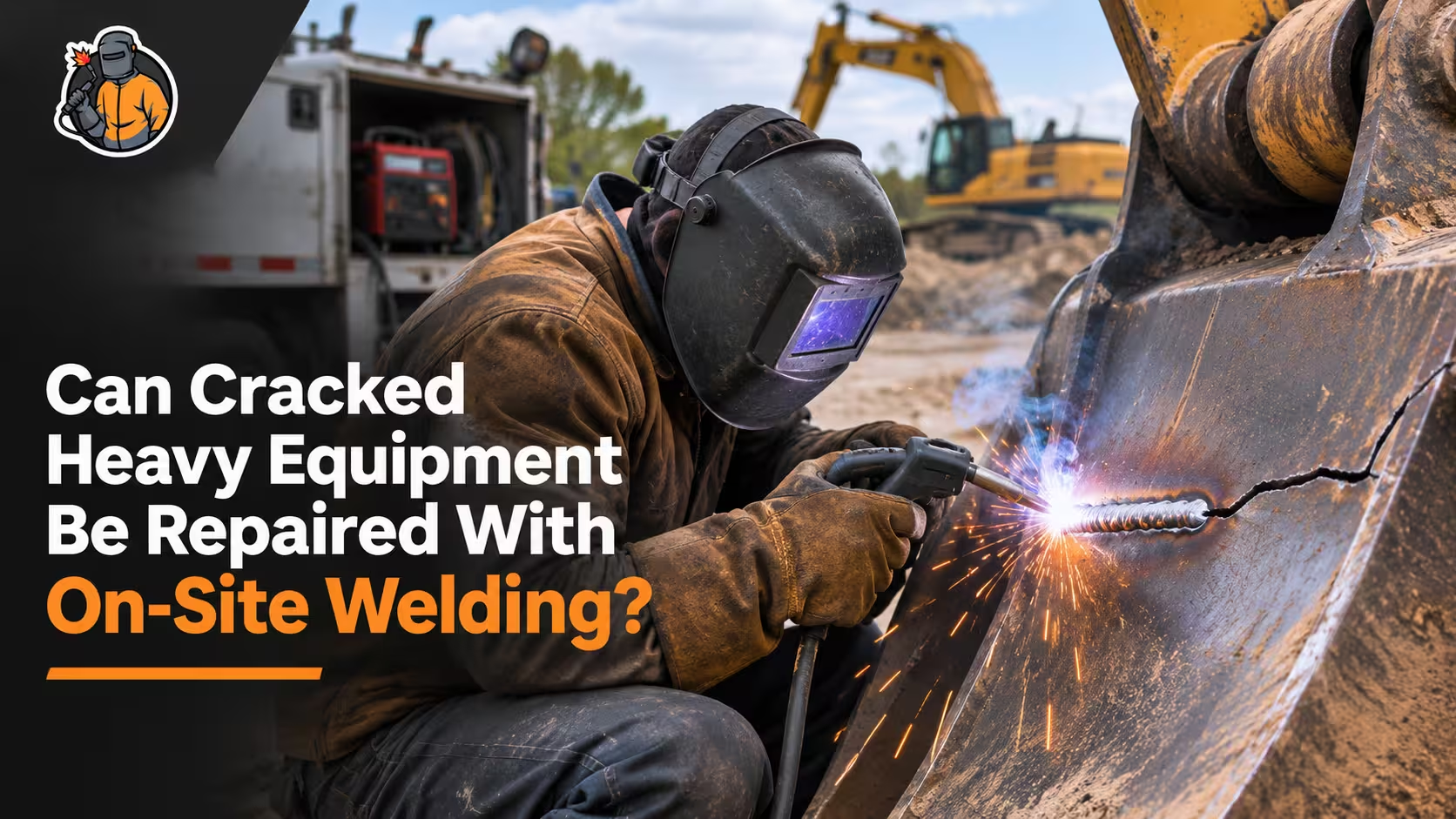
For example, a cracked gate hinge may appear straightforward, but the welder must determine whether the surrounding steel remains sound. A misaligned gate could place excessive stress on the repaired connection and cause another failure.
For industrial equipment, the assessment may also involve reviewing manufacturer requirements, operating loads, and whether the machinery can be safely isolated.
Step 2: Select the Equipment and Welding Process
After evaluating the project, the contractor selects an appropriate welding method and supporting equipment.
A mobile setup may include:
- A portable welding machine or welding generator
- Welding cables, electrodes, and suitable filler materials
- Shielding gas and cylinders when required
- Grinding, cutting, and metal preparation tools
- Clamps and equipment for maintaining alignment
- Welding helmets, gloves, protective clothing, and other PPE
- Fire protection and worksite safety equipment
The equipment required for portable welding depends on the project. A small steel bracket repair may need a different setup from welding a large assembly at an industrial facility.
Step 3: Prepare the Work Area
Before welding begins, the work area must be made safe.
Preparation may include removing combustible materials, protecting nearby surfaces, establishing ventilation, and restricting access to the welding area.
The metal itself may require cleaning, removal of damaged weld material, joint preparation, and alignment.
These steps are essential because contamination, poor fit-up, and unsuitable worksite conditions can affect weld quality.
Step 4: Perform and Inspect the Welding
The welder completes the work using the selected process and appropriate procedure.
Afterward, the connection is inspected for relevant defects, including visible cracking, incomplete welds, or other unacceptable conditions.
Some applications require additional testing or formal inspection before the component can return to service.
Helpful note: A finished weld’s appearance alone does not establish that a repaired component can safely carry its intended load.
When Should You Use Mobile Welding?
The strongest reason to choose mobile welding is that the work is more practical, efficient, or necessary at the component’s existing location.
The following situations illustrate common field welding applications.
Residential Welding Repairs
Homeowners may need welding assistance for damaged steel gates, metal fencing, railings, or permanently installed metal features.
Consider a driveway gate that has begun dragging because its hinge bracket has separated from the frame. Removing the entire gate could be inconvenient, particularly when its size or mounting arrangement makes transportation difficult.
A mobile welder can assess whether the damaged connection is suitable for repair at the property.
Residential welding repairs still require careful evaluation. Railings and other safety-related components must meet their applicable performance requirements.
Commercial Welding Projects
Commercial properties often contain metal assemblies that are difficult to remove without disrupting operations.
Examples include:
- Damaged loading-area metal components
- Cracked steel gate connections
- Broken equipment mounting brackets
- Metal barriers and protective guards
- Certain installed steel supports
A warehouse with a damaged protective barrier may benefit from an on-site assessment because the barrier can be inspected in its actual operating environment.
However, a repair must address the cause of the damage. If repeated forklift impacts are responsible, welding alone may not prevent another failure.
Industrial Welding Services
Industrial facilities rely on welded components throughout their equipment and infrastructure.
A broken mounting connection can interrupt production, particularly when the affected assembly is difficult to remove.
Field welding services may help repair suitable components while avoiding unnecessary transportation or extensive disassembly.
However, industrial welding requires coordination with facility personnel. Equipment isolation, hazardous energy control, work permits, and operational restrictions may affect when repairs can proceed.
Critical machinery components may also require engineering review or manufacturer-approved procedures.
Construction and Installation Projects
Construction sites frequently require welding at the installation location.
Steel assemblies may need adjustments, connections, or modifications after they have been positioned.
For example, a contractor installing a metal support assembly may discover that an approved connection must be completed after the surrounding structure is in place.
On-site welding can accommodate these situations when access, engineering requirements, and site conditions permit.
What Are the Main Benefits of Mobile Welding?
Mobile welding offers practical advantages, but those benefits vary with the project’s size and complexity.
| Benefit | Practical Value |
| Reduced transportation | Large or installed components may remain at their location. |
| Less disassembly | Some repairs can be completed without removing surrounding assemblies. |
| Site-specific assessment | The welder can examine damage and installation conditions together. |
| Scheduling flexibility | Work may be coordinated around site access and operating requirements. |
| Installation support | Metal connections can be completed where components are positioned. |
One important advantage is avoiding unnecessary handling of heavy metal components.
Transporting a large steel assembly may require lifting equipment, additional labor, and careful reinstallation. When a suitable repair can be performed safely on-site, some of those steps may be avoided.
However, mobile welding services are not automatically faster or less expensive. Travel, setup, site restrictions, specialized equipment, and inspection requirements can influence the overall project.
The best choice depends on the complete scope of work rather than transportation alone.
Which Welding Processes Are Used for Mobile Welding?
Different welding processes have different advantages and limitations. Choosing the appropriate method depends on the metal, joint design, working environment, and required weld quality.
Stick Welding
Stick welding, formally called Shielded Metal Arc Welding, uses a consumable welding electrode with a protective flux coating.
It is commonly used for steel repairs and construction applications.
Because the process does not rely on an external shielding-gas supply, it can be practical for certain outdoor projects.
However, proper electrode selection, storage, and welding technique remain important.
MIG Welding
MIG welding, commonly associated with Gas Metal Arc Welding, uses a continuously fed wire electrode.
It can be efficient for suitable fabrication and repair applications.
Many MIG welding setups use shielding gas to protect the molten weld from atmospheric contamination. Wind can disrupt that protection, making outdoor conditions an important consideration.
TIG Welding
TIG welding, formally called Gas Tungsten Arc Welding, uses a nonconsumable tungsten electrode.
It provides precise control and is useful for certain stainless steel and other metal applications.
However, TIG welding generally requires clean material preparation and suitable shielding conditions.
The process selected should match the project’s technical requirements rather than simply the equipment available.
What Are the Limitations of On-Site Welding?
Although portable welding offers flexibility, some projects are better completed in a controlled workshop.
Weather and Outdoor Conditions
Rain, moisture, and wind can interfere with welding operations.
Moisture introduces electrical safety concerns, while strong wind may compromise shielding gas during certain arc welding processes.
For projects in Portland, Oregon, weather conditions deserve particular attention when scheduling outdoor welding.
Temporary protection may help in some circumstances, but welding should not proceed when safe conditions or acceptable weld quality cannot be maintained.
Limited Access and Working Space
A damaged connection may be located behind machinery, close to combustible materials, or in an area with restricted movement.
Even if the metal is weldable, the welder needs enough space to prepare the joint, position equipment, and inspect the finished work.
Some components must be removed because their installed position prevents a suitable repair.
Material and Structural Restrictions
Certain alloys, heat-treated components, and heavily damaged assemblies require specialized procedures.
A crack in a decorative metal feature presents different risks from a crack in a lifting attachment or load-bearing machinery frame.
Critical components may require engineering approval, manufacturer guidance, or testing.
When the required procedure cannot be established, replacement may be safer than welding.
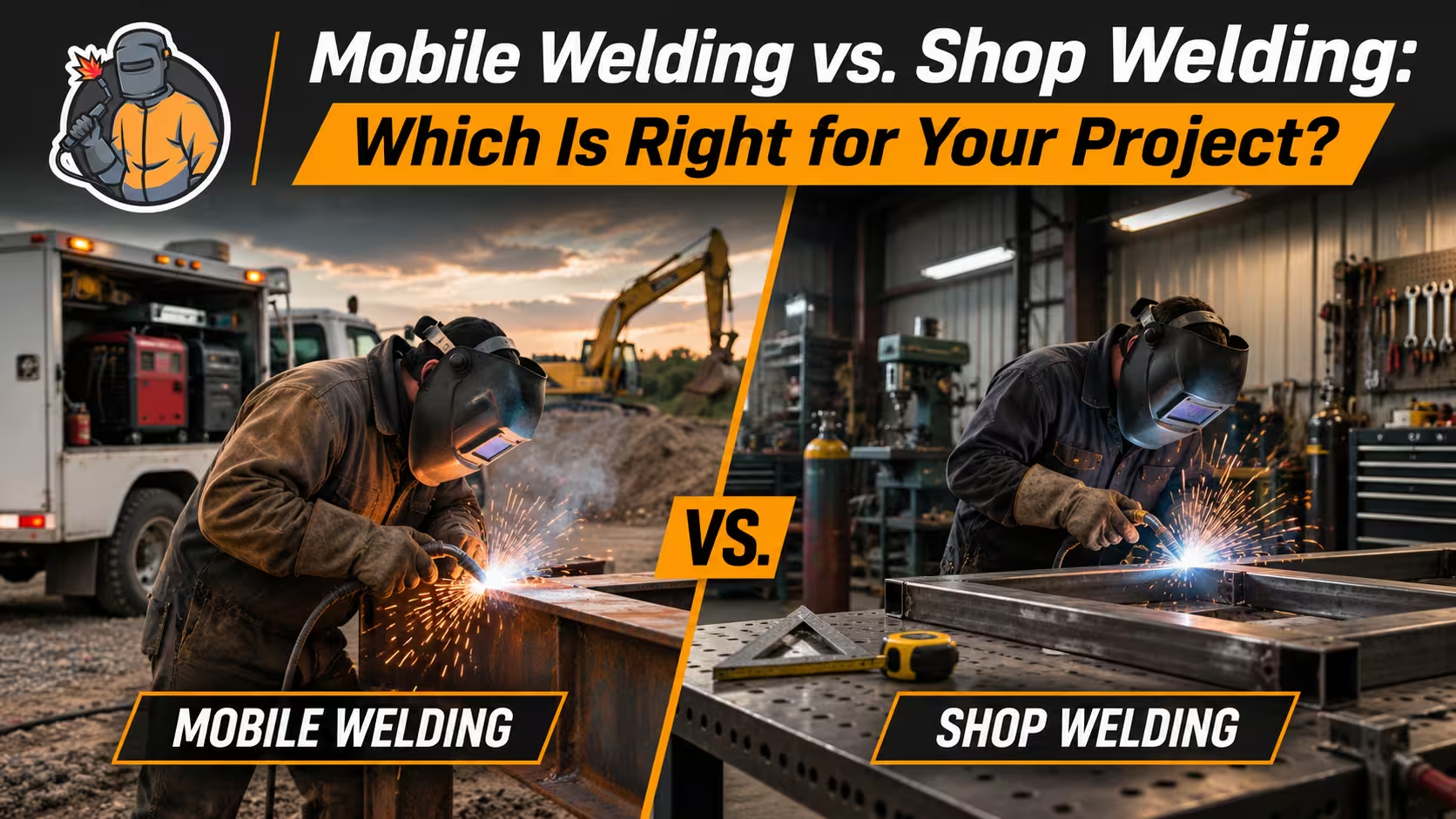
Mobile Welding vs. Shop Welding: Which Is Better?
The difference between field and shop welding is primarily the working environment, not necessarily the quality of the welder.
A fabrication shop offers controlled conditions, stationary equipment, and easier access to specialized tools.
Mobile welding provides flexibility when components cannot conveniently be moved.
| Project Situation | Often More Practical |
| Large, permanently installed steel gate | Mobile welding |
| Repetitive fabrication of small components | Shop welding |
| Installed equipment bracket requiring assessment | Mobile welding |
| Complex fabrication requiring specialized machinery | Shop welding |
| Outdoor connection with unsafe weather conditions | Shop welding or rescheduling |
| Critical component requiring controlled procedures | Depends on engineering requirements |
These examples are general guidance, not automatic repair recommendations.
For some projects, the most effective solution combines both approaches. A replacement component may be fabricated in a workshop and installed or welded at the property.
How Is Safety Managed During Mobile Welding?
Welding produces heat, sparks, fumes, and intense light. These hazards must be controlled wherever the work takes place.
Professional welding safety procedures consider the surrounding environment, nearby workers, combustible materials, ventilation, and electrical conditions.
Depending on the site, precautions may include:
- Removing or shielding combustible materials
- Establishing appropriate fire protection and fire-watch arrangements
- Using suitable welding PPE
- Protecting nearby people from welding arc exposure
- Controlling fumes through appropriate ventilation
- Isolating machinery and hazardous energy
- Following applicable hot-work authorization procedures
The Occupational Safety and Health Administration establishes requirements addressing welding hazards, including fire prevention and worker protection.
Relevant welding standards and procedures, including those developed by the American Welding Society, may also apply depending on the work.
Practical example: A warehouse bracket repair should not begin while nearby employees are moving flammable packaging through the work area. The contractor and facility manager must first establish safe working conditions.
Safety planning is part of the job, not an optional step after equipment arrives.
How Do You Choose the Right Mobile Welding Contractor?
Choosing among mobile welding contractors involves more than finding someone who can bring a welding machine to your property.
Start by explaining what needs repair or fabrication and how the component is used.
Ask whether the contractor has experience with the relevant material and application. For critical components, discuss the applicable procedures, qualifications, inspection requirements, and whether engineering involvement is necessary.
Before scheduling, prepare:
- Photographs showing the damage and surrounding assembly
- The component’s approximate dimensions and location
- Material information, if available
- Details about site access and operating restrictions
- Any known structural or safety concerns
These details support a more useful welding project assessment.
For projects in Portland, OR, Complete Fusion Welding LLC offers mobile welding services alongside its metal fabrication capabilities. Customers can describe their project and discuss whether completing the work on-site is appropriate.
Frequently Asked Questions
Can Mobile Welding Be Done at a Residential Property?
Yes. Suitable residential projects may include metal gates, fences, railings, and other installed metal components. The welder must confirm that the work area is accessible and safe.
Is Mobile Welding as Strong as Shop Welding?
A properly designed and executed field weld can meet applicable requirements. Results depend on material preparation, procedure selection, working conditions, and inspection, not simply the location.
Can Mobile Welding Be Used for Emergency Repairs?
Some emergency welding repairs can be assessed on-site. However, urgency does not eliminate safety requirements. Critical components must be evaluated before repair or return to service.
Does Mobile Welding Require Electricity at the Property?
Not always. Some mobile setups use a welding generator or another suitable independent power source. Power requirements should be confirmed with the contractor before scheduling.
Can a Mobile Welder Fabricate New Metal Components?
Certain fabrication and installation tasks can be completed on-site. More complex work may require workshop equipment, with final fitting or installation performed at the project location.
Is Mobile Welding the Right Choice for Your Project?
Mobile welding is particularly valuable when damaged or unfinished metal components are large, installed, or inconvenient to transport. It supports residential repairs, commercial maintenance, industrial applications, and construction work.
The decision should always begin with the material, project requirements, accessibility, and safety conditions.
Complete Fusion Welding LLC provides professional welding and metal fabrication services in Portland, Oregon. If you have a damaged metal component or an installation requiring welding, discuss the project with the team to determine whether an on-site approach is suitable.
Choosing the right welding method and work location from the beginning can help avoid unnecessary disassembly, unsuitable repairs, and preventable project delays.